Cornell Reopens 2024 Rape Case
By Ashlyn Belote, Staff Writer
On Sept. 28, 2026, a New York prosecutor reopened a case of allegations of gang rape at a Cornell University fraternity. Dating back to October 2024, a 20-year-old woman said she was given ketamine, marijuana and alcohol before being sexually assaulted by seven Cornell students.
On Sept. 16, the woman, whose identity was not revealed, filed claims of sexual assault perpetrated by members of the Chi Phi fraternity, often called the “Cornell 7” by the media. The investigation also included photos of what appeared to be a group chat between members of the fraternity discussing the events that happened that night, including photos of the victim intoxicated.
While Cornell said the school had performed an internal investigation, conducted a disciplinary investigation and gave both the woman and fraternity members opportunity to testify on the matter, a complaint was filed against the university claiming they had failed to act on any measures to prevent sexual violence and assaults on campus.
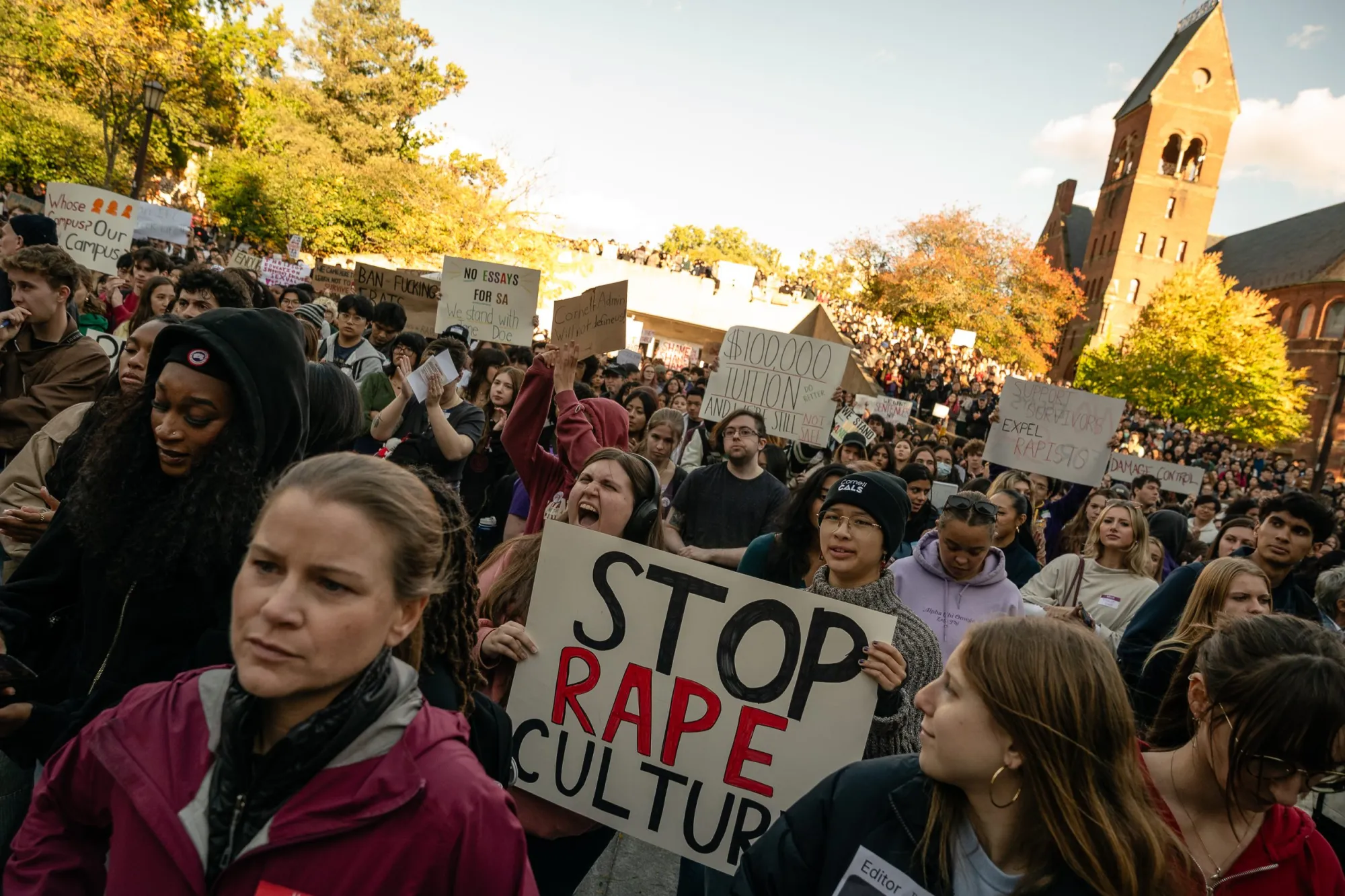
After the complaint, Cornell students shifted their blame to not just the school as a whole, but their president, Michael I. Kotlikoff. On Oct. 5 a series of student-led protests started, coining the phrase “we are Jane Doe,” a phrase of solidarity for the victim that would show that sexual assault is an issue on every campus, and that anyone can be “Jane Doe.”
On Oct.13, Kotlikoff called the allegations “deeply disturbing” and sent out a statement saying all fraternity events and parties held in council houses would be suspended during the 2026-27 academic year. Kotlikoff sent out a letter to the students and faculty of Cornell stating, “These measures will provide time for a thorough review of fraternity life at Cornell to determine whether and how it can safely continue.” He also stated “If, at the end of the day, fraternities cannot exist in a safe environment and we can’t be convinced that they can be safe, then we should make that decision.”
No criminal charges have been filed against those responsible. According to the “Cornell Daily Sun,” Cornell’s student newspaper and who initially broke the news, students Matthew Ingalls and Jonathan Newell were expelled as they were the two responsible for the actual assault. Winston Lee and Gillio Lopes were suspended. Lee, who was suspended for two years and put on probation, was among the students ordered to only write a reflection paper along with Lopes, Scott Norris and Scott Kretzschmar.
Because sexual assault and violence is a matter that must be taken seriously, universities are required to provide Title IX training to all students and faculty. This federal law prohibits sex-based discrimination. It also requires that colleges investigate matters such as sexual assault, sexual harassment, dating violence, stalking and other sexual misconduct.
Universities are also required to follow the Clery Act. Named after Jeanne Clery, a 19-year-old who was raped and murdered in her dorm at Lehigh University in Pennsylvania in 1986, the Clery Act was passed in 1990 by President George H.W. Bush after backlash for colleges failing to release statistics. This law requires that all higher education institutions release statistics of sexual assault on campus.
The University of Mary Hardin-Baylor, which complies by these rules under federal law, releases their online annual safety report. In the past three years, the university has seen seven reported cases of sexual assault on campus.
The university works on these cases thoroughly through reviewing a series of hearings, evidence and accounts from the victims of those accused. Once the university has determined that there is enough true evidence to build a full case, they will then conduct a series of sanctions ranging from a written warning to full academic expulsion, as stated in UMHB’s student and faculty safety handbook.
According to the Rape, Abuse & Incest National Network (RAINN), the largest anti sexual assault and violence organization in the United States, 1 in 8 students experience some form of rape or sexual assault on campus, one in four being undergraduate women (26%) and 1 in 14 being men (7%). RAINN also finds that of sexual assault cases were reported by 16% of women during their first year of college.
Universities nationwide abide by these laws, and with them come resources. Victims of rape and sexual assault have a voice, and they should not be afraid to use that voice. To file a report, students can report to their university’s Title IX coordinator or RAINN’s 24/7 sexual assault hotline at 1-800-656-4673. Students at UMHB can also report to the university’s Title IX coordinator Kasey Blomquist: kblomquist@umhb.edu, as well as the Belton Police Department: 254-933-5840.