Since 1912, UMHB Produces Alumni in Journalism
By Emily Jenkins, Editor-in-Chief
Since 1921, the University of Mary Hardin-Baylor has a proud history of producing alumni in the journalism field.
Journalism at Mary Hardin-Baylor College
Baylor College, now the University of Mary Harding Baylor, established the first school of journalism in a college for women and the second institution in Texas to offer a Bachelor of Journalism in 1921, Eleanor James wrote in Forth from Her Portals.
William H. Vann Head of the English department with T.E. Sanderford’s assistance offered the first journalism course. The English majors worked on The United Statements, the college weekly, The Baylorian the monthly magazine, and The Blue Bonnet, the college annual. Under the School of Journalism, the students also prepared weekly bulletins containing brief college news to send to various newspapers in Texas for publication. “The courses of instruction are proving to be very popular among those taking them.”
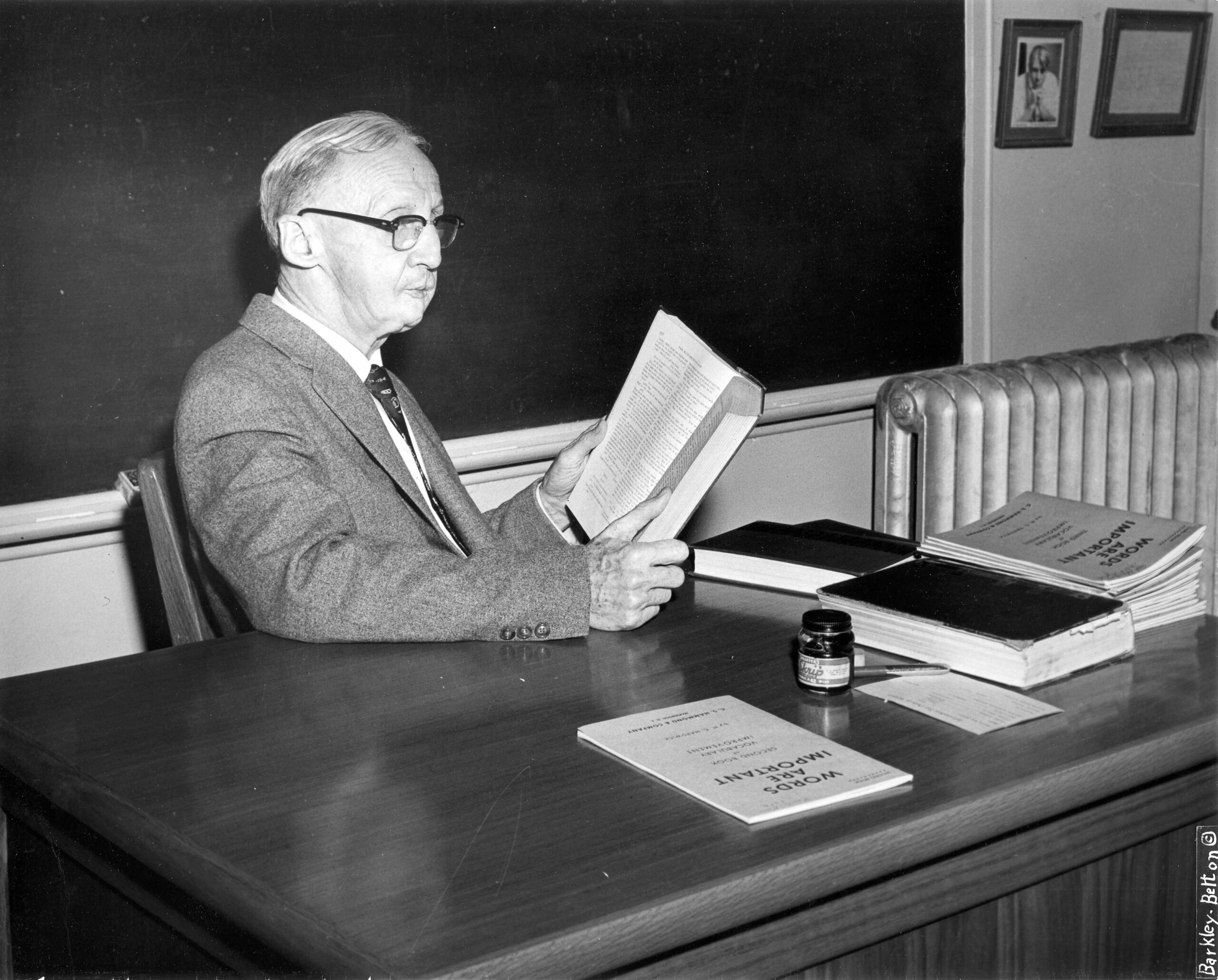
William H. Vann
Photo Courtesy of UMHB
By 1923, the journalism department was looking to be well established, affiliated with other leading departments of journalism in the United States, and have improved laboratory and library equipment, as found in The Bluebonnet 1923.
The department grew when Guion Griffis became a professor. Griffis, Baylor College for Women ’21 alumna and journalism department head, was responsible for bringing journalists, authors and poets to speak at campus and increased the number of journalism students at Baylor College, James wrote.
The first class to graduate with a Bachelor of Journalism was the Class of 1924, noted in the 1924 Bluebonnet. That same year, The United Statements changed its name to The Bells, which is still in publication today.
In 1925, Baylor college started the first chapter of the national honor fraternity for women in journalism, Theta Sigma Phi, in a women’s college. Ailese Parten, ’25 alumna, was the first initiate to Alpha Epsilon Chapter of Theta Sigma Phi at Mary Hardin-Baylor in 1925, Eleanor James wrote.
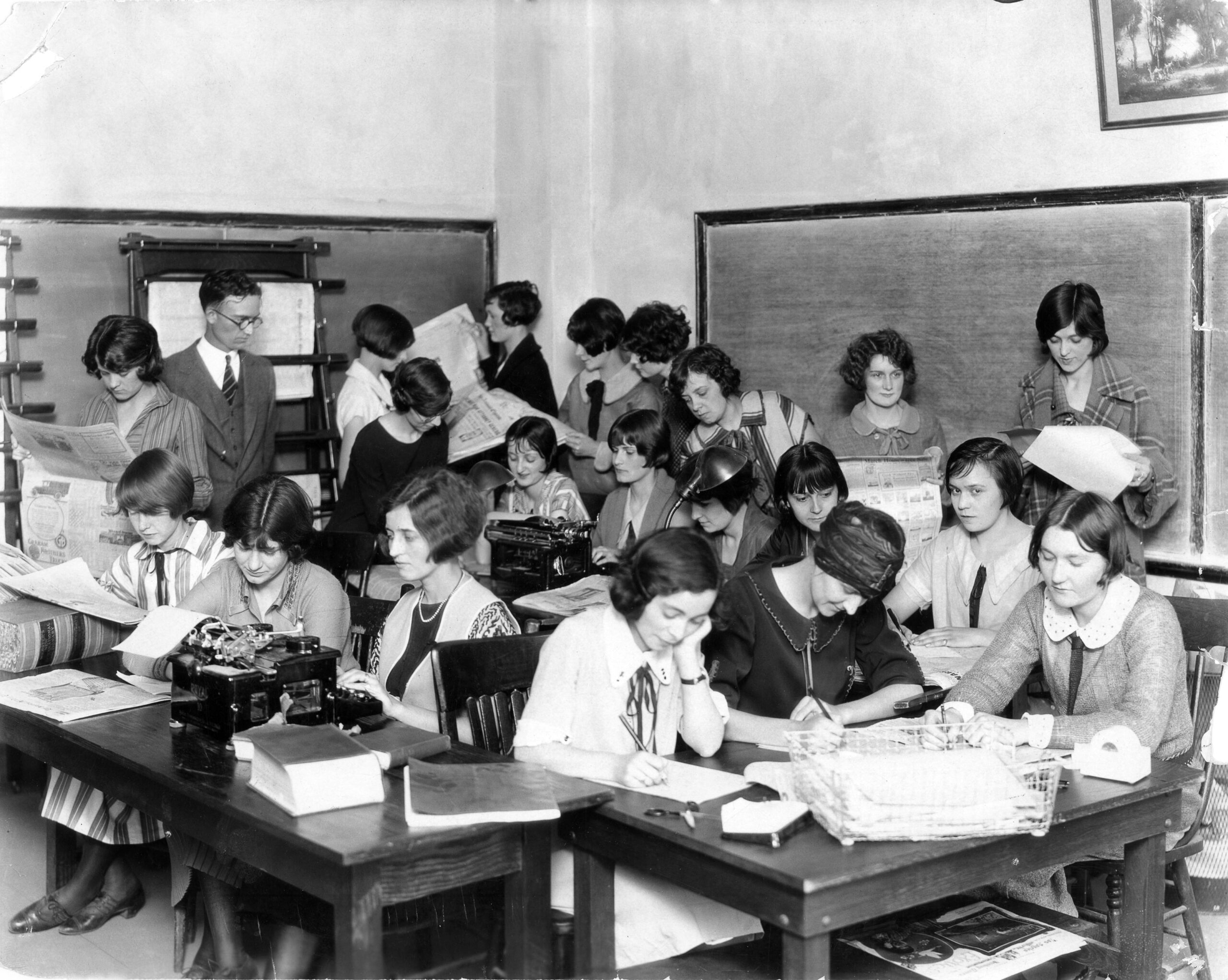
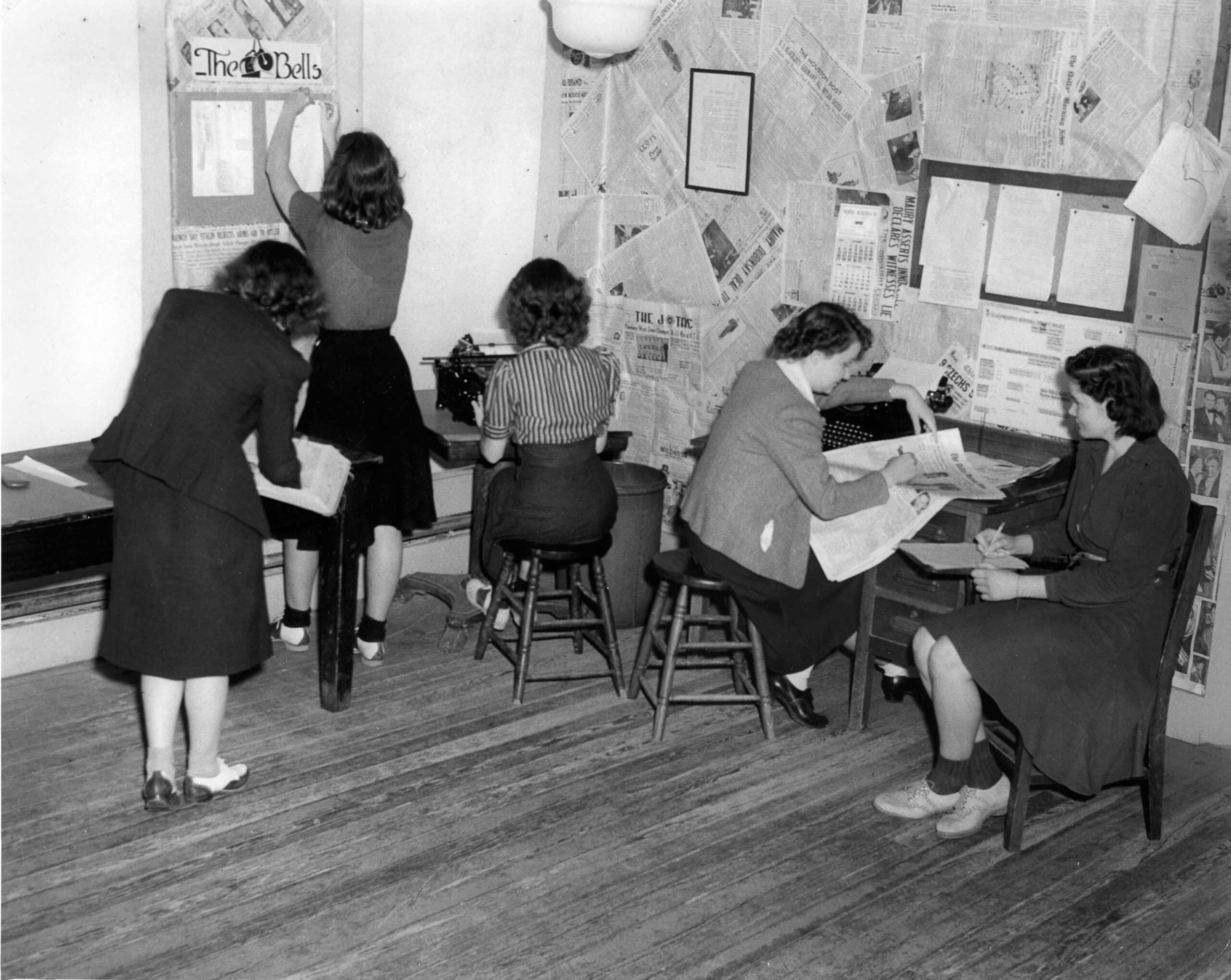
The Journalism department at Mary Hardin-Baylor works on the newspaper in 1925.
Photo Courtesy of UMHB
Paten said in a speech on the founding of journalism at Mary Hardin-Baylor Griffis taught her to think for herself through her journalism courses. Later, Parten also taught journalism, as found in the 1931 Bluebonnet. She said, “The B.A. degree should not be granted merely for an accumulation of credits but because a person has proved his possession of ‘the right ways to do things.’”
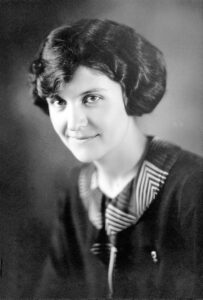
Ailese Parten
Photo Courtesy of UMHB
In 1931, the journalism department continued its success. Allen Baker, City Editor of the Temple Daily Telegram, sent a letter to Parten praising the three journalism seniors she sent on Dec. 2 1931, “All show they have had good fundamental training. Their future depends on their ability to acquire a little better word choice, more terseness and to put more snap into their work. Personally, I think all three are better now than the average newspaper reporter. We have found them very helpful to our paper.”
The degree program shifted a little in 1936 when the last Bachelor of Journalism degree was given. The degree was changed to the Bachelor of Arts degree with a major in journalism, as found in a newspaper clipping from the UMHB Museum archives. “During the 13-year period, over 50 students received the degree.”
As a Bachelor of Arts degree with a major in journalism, the journalism department remained for a little over 30 years. “The work in the Department of Journalism is designed to give young women a thorough training in journalistic writing and editing, and emphasis is placed on the opportunities for women in the profession of journalism,” as said in 1950, the Bulletin of Mary Hardin-Baylor College, course catalog.
In 1955, the journalism department, which held The Bells and the Department of Journalism, moved to the Wilson Administration to make way for construction of a new library building, as found in a newspaper clipping from the UMHB Museum archives.
In 1968, Mary Hardin-Baylor College Bulletin offered the journalism major for the final time.
Joseph Tabarlet, professor in communication and media studies department chair at UMHB, explained he believes the journalism major left because they no longer had a professor over the department. Although The Bells still offered teaching in journalism, the newspaper began to decline in the 70s and 80s when it became more like a newsletter. “It didn’t really have the structure and the professional training that we do now.”
Although not as professional or structured, Mary Hardin-Baylor College still offered the study of journalism through The Bells. Vicki McKay, a ’71 Alumna on the Alumni Board, was Editor-in-Chief of The Bells during her time at Mary Hardin-Baylor. At the time, The Bells supervisor did public relations for the college. In the spring of ’70, McKay said she took over as editor. The Bells has a small staff, so she wrote 85% of the paper. She said she loved doing it and had a lot of fun out of it, but it was not easy. The Belton Journal would print the paper for The Bells, but she would proof the galleys, which held the type that would print the paper. She worked her tuition cost down by working 20 hours per week with The Bells through the work program, which is still in use today.
McKay did not go into journalism, but she still found learning this knowledge useful to her career. “I was teacher, but I often had opportunities throughout my career that I had to write an article.” She also mentioned her Bells work helped her church volunteer work in writing articles, cutlines and coming up with publicity. McKay ended up teaching marketing, advertising, entrepreneurship and organizational decisions. She taught 27 years at high school level and 17 years at the University of Houston. “I used the experience I had from The Bells the whole time.”
Journalism at Mary Hardin-Baylor University
20 Years of Silence and the Rebirth of the Journalism Department
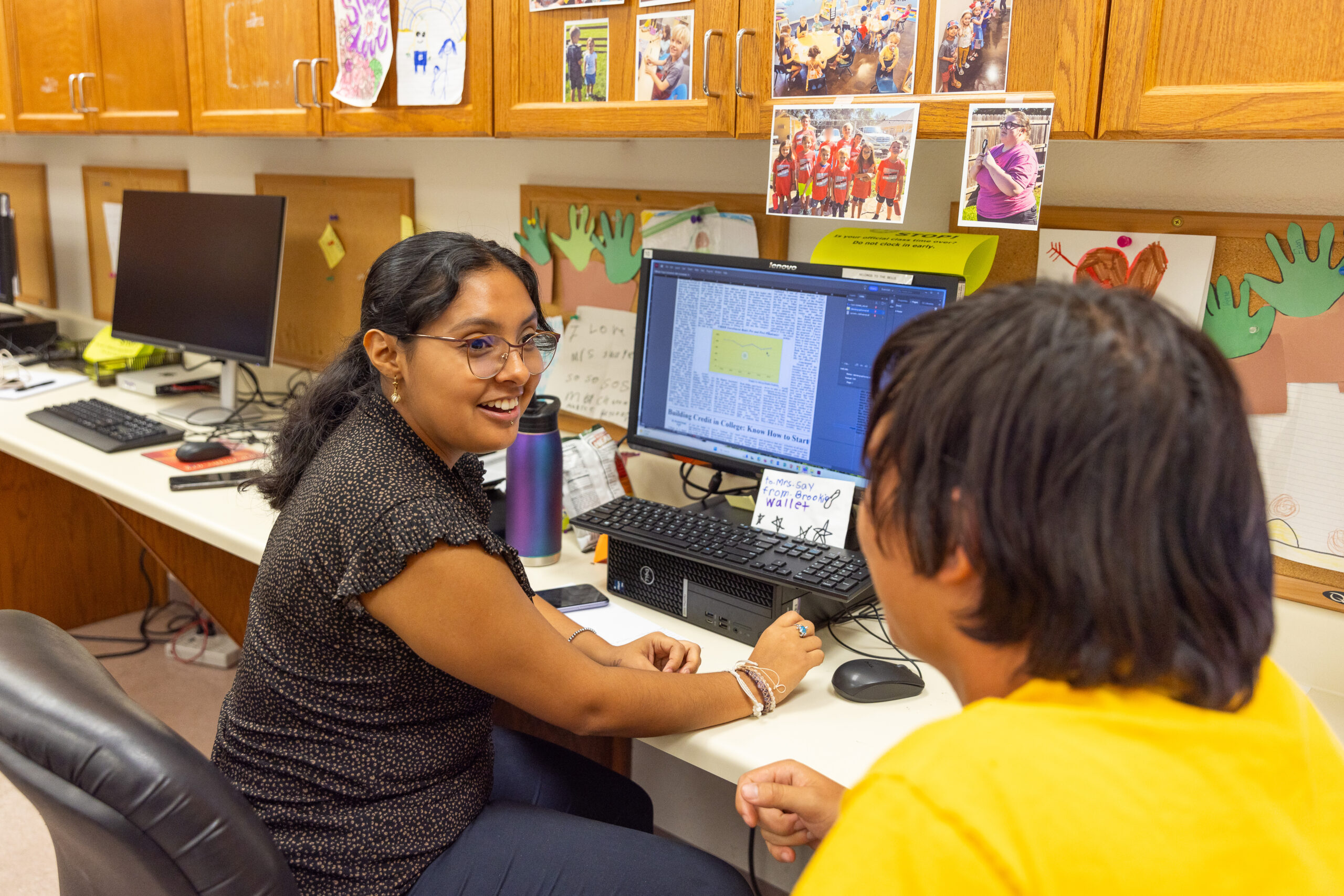
Xhaxany Cuellar, graphic designer and reporter for Hood County News and past editor-in-chief of The Bells, creates a copy of The Bells newspaper while talking to Jackson Keenan, past editor-in-chief of The Bells, in 2024.
Photo Courtesy of UMHB
Mary Hardin Baylor became co-educational in 1971 and became a university in 1978, but still there was no journalism department. From the 70s to the late 90s, no journalism program existed at the University of Mary Hardin-Baylor.
Tabarlet arrived at UMHB in 1995 when there was no journalism program. Although UMHB offered two journalism courses through the English department, the university was about to remove the classes because they were not being taught. “They don’t have anybody to teach it. They hired adjuncts, but it was really not anything that anybody wanted to do.” In addition, The Bells was not part of an active program, Tabarlet said.
“So we changed all that. We took those courses and changed them over to communication courses. We got The Bells under our control… in the [communication and media studies] department. And that’s really when it began.”
Mass communication became a major since the late ‘90s. Tabarlet explained that they “created a journalism degree at that time, which contained one public relations class.” Later they changed the majors in the mid-2000s to include a public relations track with the journalism track when they hired Avery Green, UMHB’s public relations professor.
UMHB’s journalism department went through another unstable period when their long-term professor left. Tabarlet explained, “we went through a period where we had people who’ve only stayed a short time, or we had adjuncts… so it was very difficult to kind of keep any momentum going. But in the last few years, that’s changed, and we’ve gotten more journalism people. But historically, it’s been more PR, but that’s really not due to any difference between the program.”
Because of the instability during that time, public relations became the larger mass communication program because Green developed a stable, growing program at UMHB.
The Journalism Department and the Public Relations Department Today
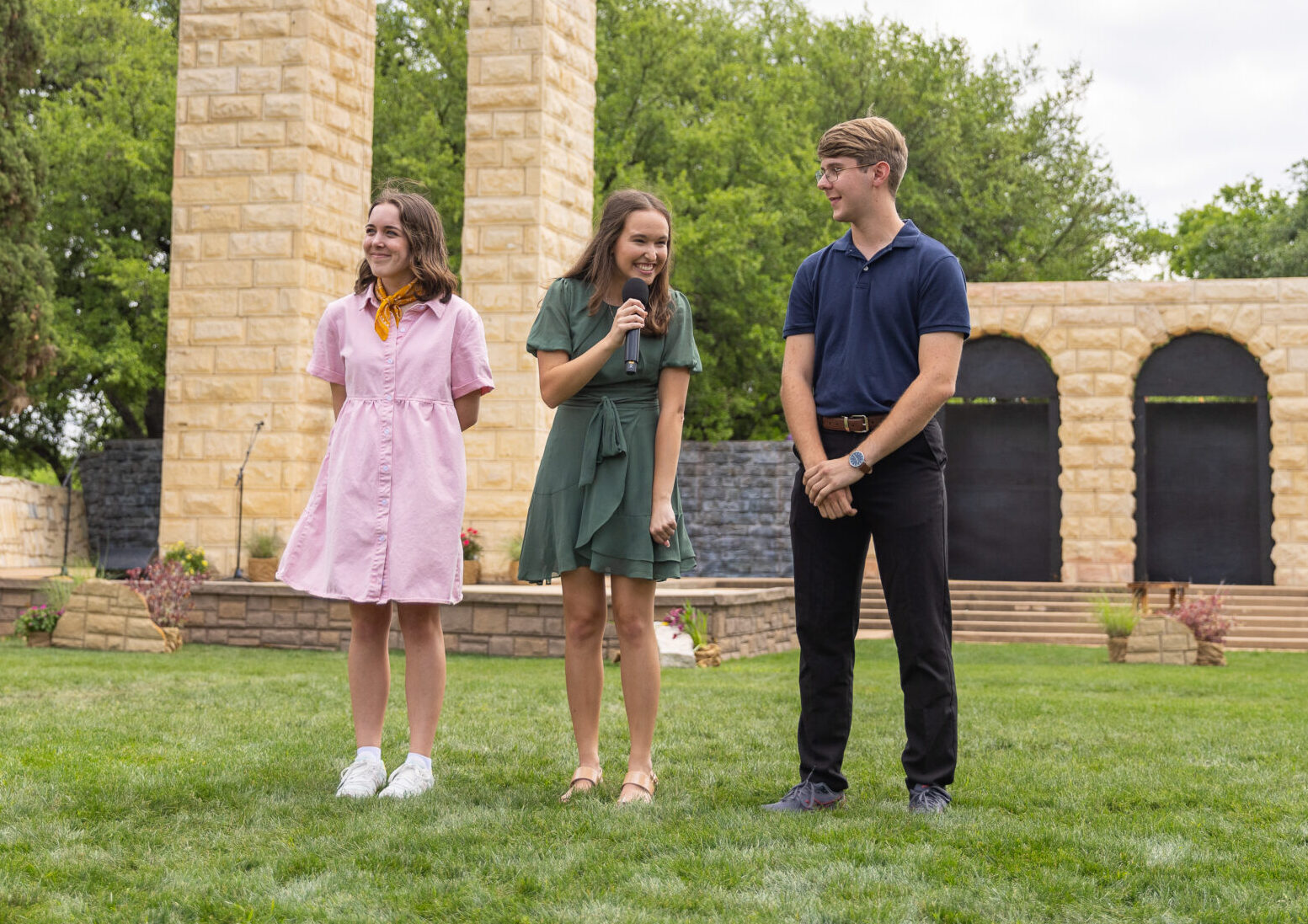
(middle) Director Victoria Kuntz speaks at the 86th Easter Pageant between (left) Erin Doyle and (right) Brock Pfrommer. Kuntz said that her experience with Easter Pageant helped prepare her for her career in public relations.
Photo Courtesy of UMHB
Although the journalism department has a stable, growing program now, Victoria Kuntz, UMHB 2025 alumna and Marketing and Administrative Coordinator at Morether, switched from journalism to public relations.
Kuntz explained that she loves the storytelling aspect of journalism, but she switched from journalism to PR because she knew it would be better for her financially.
Public relations specialists, according to the U.S. Bureau of Labor Statistics, is expected to have employment grow 5% from 2024 to 2034 with the median annual wages in May 2024 being $69,780. This is a significantly better outlook than the traditional journalists who are expected to have employment decline 4% from 2024 to 2034 with the median annual wages in May 2024 being $60,280. However, Kuntz explained that even if she stuck with her journalism major, she would have been fine but would have graduated a semester later.
In addition to the financial benefits, Kuntz did not want to deal with the political bias as a Christian. “I saw it [PR] as more like tight and where I wanted to go with my writing and my views on things. I wanted to be a part of something that I fully agree with.”
Kuntz explained that marketing and PR are similar, she learned she can still tell stories in a different way from journalism, using pictures and graphics, and sometimes words. She writes PR scripts, talks to the press and plans events. She tells the story of the Christian company she chose. She agrees with everything they promote and do.
However, Kuntz believes that more public relations majors switch to journalism in other universities because unlike the public relations department at UMHB, journalism is not as “cut-throat” as the public relations program.
The Journalism Department Starts Growing Again
Holly Carr, political science major and staff writer for The Bells, takes photos at the UMHB 2025 Homecoming on Oct. 18, 2025.
Photo by Emily Jenkins
Although some students like Kuntz prefer public relations to journalism, Tabarlet explained that the number of journalism majors has increased with the new head of the journalism department, Paul Carr. After coming to UMHB in January 2024, Carr has helped fix the lack of structure and leadership. “He has the training and the experience with student media to get it going,” Tabarlet explained.
Xhaxany Cuellar, graphic designer and reporter for Hood County News and past editor-in-chief of The Bells, agrees that Carr has helped the journalism department. Cuellar graduated UMHB as an economics major in 2025, but “fell in love with the journalism industry.” Cuellar was able to enter the journalism field upon graduation because Carr taught her how to write properly, take photos, use a camera, and understand AP style. As an economics major, professors Danny Taylor, Paul Stock and Chris Langford taught her economic and management skills. She’s used these skills to write stories with the Economic Development Board and learn effective management communication. Because of her background in economics she occasionally visits the economic developer in her town interpret the information for the general public.
Cuellar would tell anyone who wanted to go into journalism at UMHB, “[Carr] will be the best mentor to start out this career and help you learn, and in my opinion the most valuable asset the school has brought into the department. Listen to what he says, question him, for sure, because he’ll do it back and challenge you in ways that will make you sharper. Listen to Carr, he won’t have all the answers but he can show you the direction to go.”
In addition to helping the journalism department, Carr helped both Allyson Hinkle, a UMHB journalism 2024, and Cuellar find their current jobs. After graduation it took Hinkle around a year to find her current job at the Gatesville Messenger, but after a month of getting into a rhythm back into journalism, everything was “smooth sailing” because she became a professional.
UMHB Producing Professionals with Needed Skills
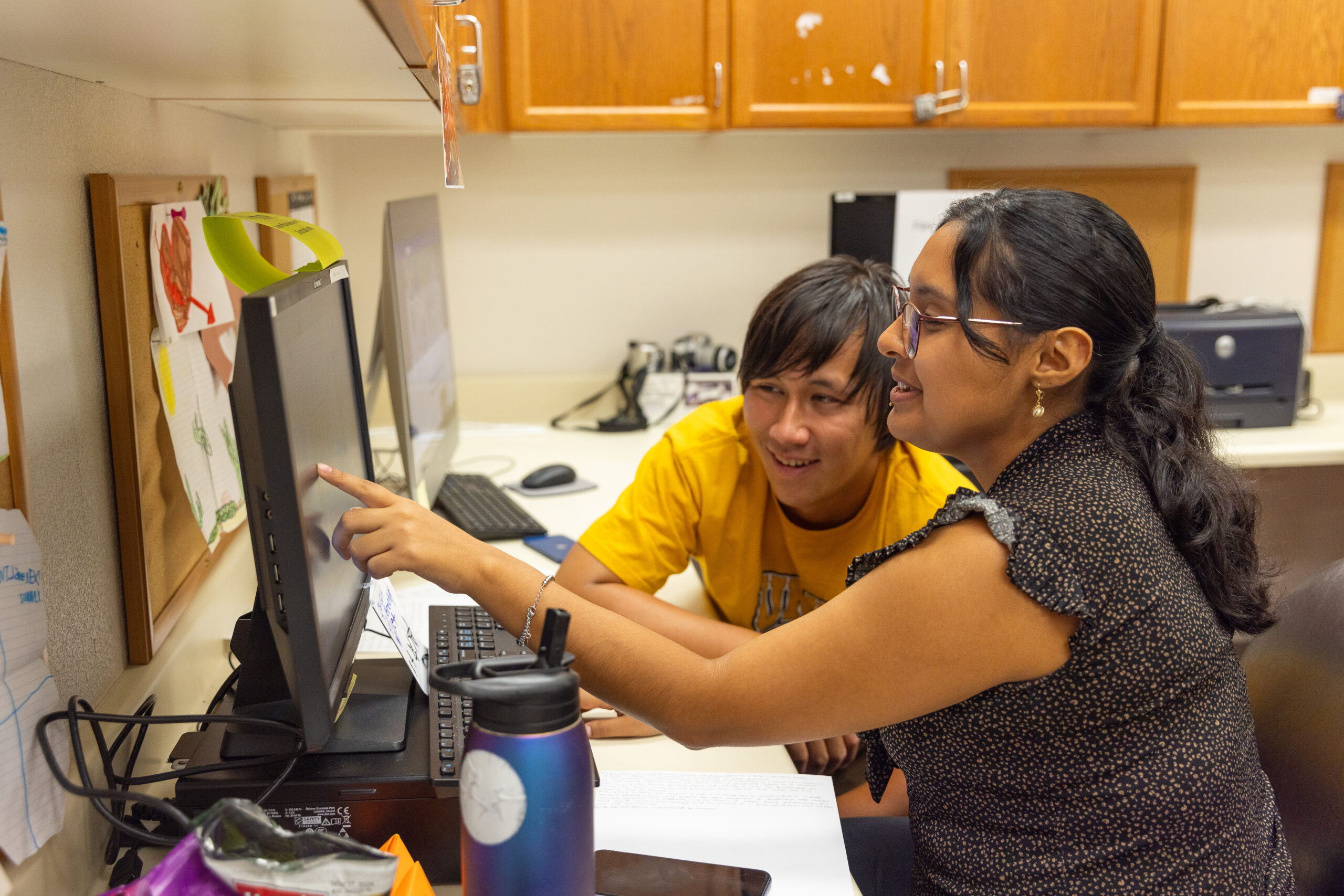
Xhaxany Cuellar points at computer monitor while talking to Jackson Keenan.
Photo Courtesy of UMHB
Now where do UMHB’s journalism majors find employment after graduation? Some find employment in traditional journalism, but others use the skills they have learned to go in a different communication field.
In the past, journalism majors would work for a newspaper, magazine, television station or radio station. Today, the term journalism is vague, Tabarlet explained. The line between journalism and other communication jobs is blurring. The “former distinctions and delivery methods are now – well, they’re passe. Nobody really worries about those types of things. For the idea of journalism through independent journalism, which is largely an online thing, is growing and people are looking into it.”
Where are they now? UMHB still keeps in touch and communicates with their alumni. Tabarlet explained that journalism and public relations alumni sometimes come back to work for UMHB or other educational institutions working in external relations and external development. “They’re using the same skills in those ways.”
Although journalists are not highly in demand, the skills they possess are. Tabarlet said, “Once you have that background in photojournalism or video journalism, you can go a lot of different places. People are looking for that sort of expertise.”
Tabarlet explained that the journalism department focus on developing skills like knowing the technology platforms journalists need, interviewing, finding information, finding resources that make good journalists. “So if you teach people that, then we don’t need to teach them how to be a newspaper reporter, a print newspaper reporter, because those jobs largely don’t exist anymore.”
Cuellar, as a professional, said “I was surprised how hard I hit the ground running. There is no training and a lot is expected from you fast.” However, she was able to stay employed because of her skill set acquired at The Bells. Two of Cuellar’s coworkers, who had worked at the Hood County News for a year, were laid off because they could only write and didn’t have a diverse skill set. Cuellar explained the event has been a great reminder to constantly develop skills because the industry is constantly evolving. “You can get replaced quick if you don’t evolve with it.”
Although UMHB is a smaller D-III university with only about 3,800 students, the university produces good workers with the skill. Tabarlet explained that internship supervisors of UMHB journalism majors who go to local news organizations have an overwhelmingly positive reaction. Tabarlet believes UMHB’s journalists become good employees because they are well trained, but also because they are hard-working, easy-to-work-with, nice students. The university does not have control over of the work situations their students go into, but Tabarlet said “the one thing we can have influence over is what kind of students we send out there and those have been universally praised.”
Hinkle, now a professional journalist, said that working under professionals influenced her most. Hinkle said what shaped her was working under other people in the journalism field, using their information and applying it to a modern setting. She was able to gain this experience through her internship with KWTX and The Bells newspaper.
The first year working for The Bells, Hinkle and the Editor-in-Chief were the only ones on staff. This brough Hinkle out of her comfort zone, and she learned to talk to people and put herself out there. As Editor-in-Chief of the Bells, Hinkle was able to gain experience in editing photos, conducting interviews and contacting higher ranking people. Her experience at UMHB helped prepare her, but not completely.
Hinkle said her broadcasting internship with KWTX was fast paced; she would punch out five to 10 stories a shift. In addition to the face paced environment, she was not prepared for the “nitty-gritty and horrid” details of the world while working the crime and affidavit beat. She had to see the world at its worst but tried to still find the good.
UMHB prepares their students for professional work but not everything life will throw at them.
Cuellar said that something a university will never prepare a journalist for is the trauma:
“You can’t study for the police tape audio of a man gunned down experiencing a mental health crisis.
“You can’t study or do an internship for the grieving family in front of you that lost their son in a wreck….and you can’t cry with them. It’s almost like an invasion of privacy to even ask them that but it’s your job.
“You can’t study for the hate mail you get or the people calling you and treating you over a story.
“You can’t teach it, you experience it once and decide if you’re able to do it again.”
Journalism to Come at Mary Hardin-Baylor
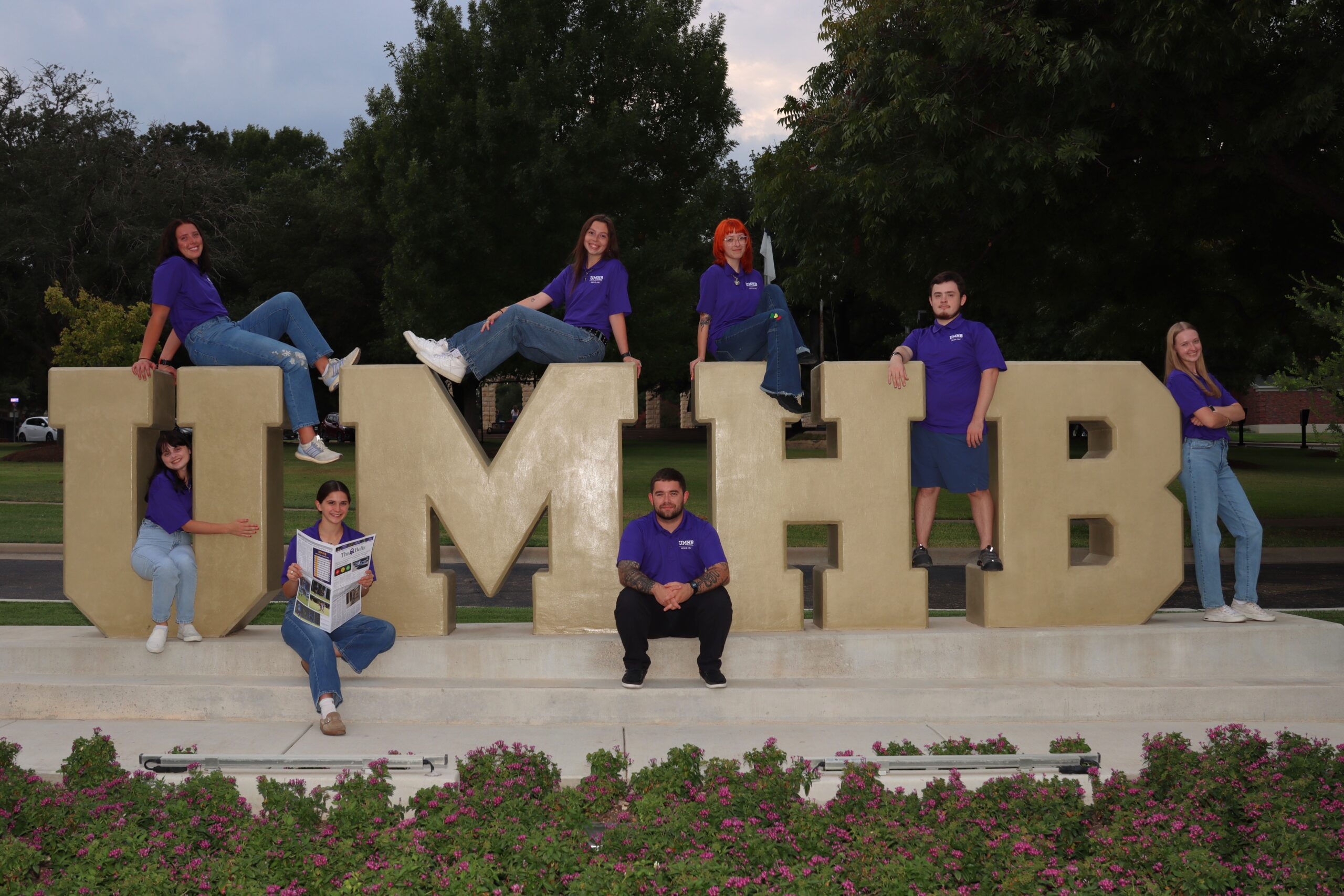
Fall 2026 News Cru staff poses for group photo.
Photo Courtesy of Paul Carr
The journalism department has had its ups and downs over the years, but where is the journalism department at UMHB headed in the next 10 to 20 years?
Tabarlet explained “In 20 years, we don’t know. We can kind of make educated guesses, but we don’t know. And that’s why we have to.. [be] getting a set of skills in our students that will be useful in a wide variety of ways.”
The U.S. Bureau of Labor Statistics projects the employment of traditional journalists like news analysts, reporters and journalists to decline 4% from 2024 to 2034, but Hinkle would say to those going into journalism at UMHB, “Don’t let the state of the industry scare you, like it scared me. Trust your gut, because some of these news outlets will be pretty shady. So, if something feels likes it is wrong – it is not the right environment – trust your gut on that. That has saved me from being in a very bad position.”
Cuellar said fake news, misinformation, shrinking industry, mental health are some of the things journalists are struggling with right now. However, the state of the journalism industry is not completely bleak, The U.S. Bureau of Labor Statistics said, “Despite declining employment, about 4,100 openings for news analysts, reporters, and journalists are projected each year, on average, over the decade. All of those openings are expected to result from the need to replace workers who transfer to other occupations or exit the labor force, such as to retire.”
In addition to job openings, the median annual wage for media and communication workers was $70,300 in May 2024, “which was higher than the median annual wage for all occupations of $49,500.”
Those in the industry can only try to predict where the industry is headed. Cuellar said about the future of journalism, “I see print media fading out more. I see the rise of having tech skills being a more attractive quality in a candidate, I see the rise of misinformation given the social media landscape today. I can see citizens submitting more of their own personal stories. I think it will be completely digitized mostly. “
Like Cuellar, Hinkle sees physically printed newspapers continuing down that downward trend in the future, except for the small-town newspapers with a resilient community. “Everything is so fickle in mind and everything can just kind of change in an instant… The future is really an endless possibility.”
Overall, no one knows what the future holds for journalism at UMHB, but James 4:13-14 says, “Now listen, you who say, ‘Today or tomorrow we will go to this or that city, spend a year there, carry on business and make money.’ Why, you do not even know what will happen tomorrow. What is your life? You are a mist that appears for a little while and then vanishes. Instead, you ought to say, ‘If it is the Lord’s will, we will live and do this or that.”