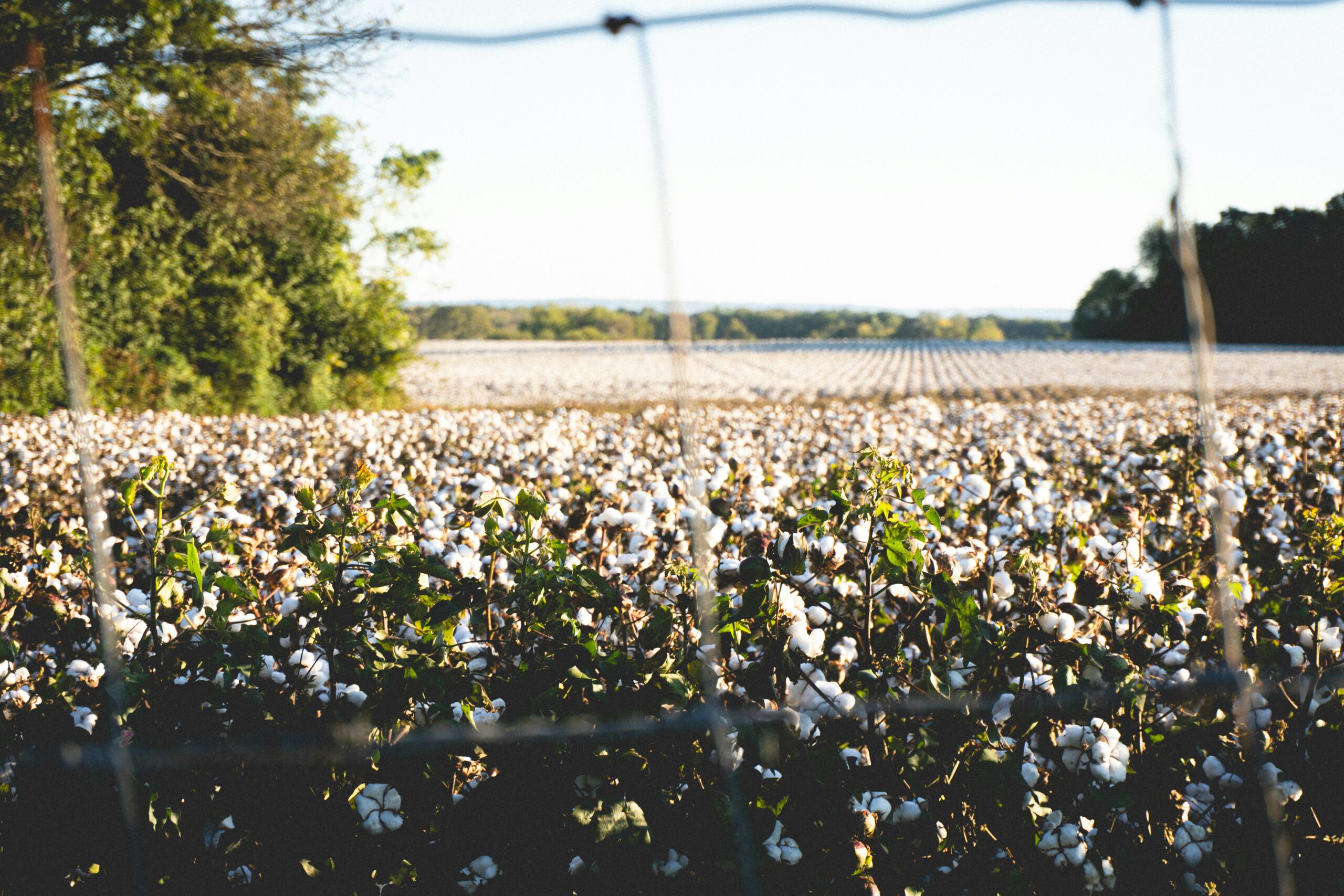
Cotton Weaving Us Together
By Emily Jenkins, Editor-in-Chief
From a small cotton seed, grows one large industry.
As smaller farms and gins gradually begin merging to form larger farms and gins, the cotton industry, specifically in Texas, has become more commercialized and less in demand by consumers in current times.
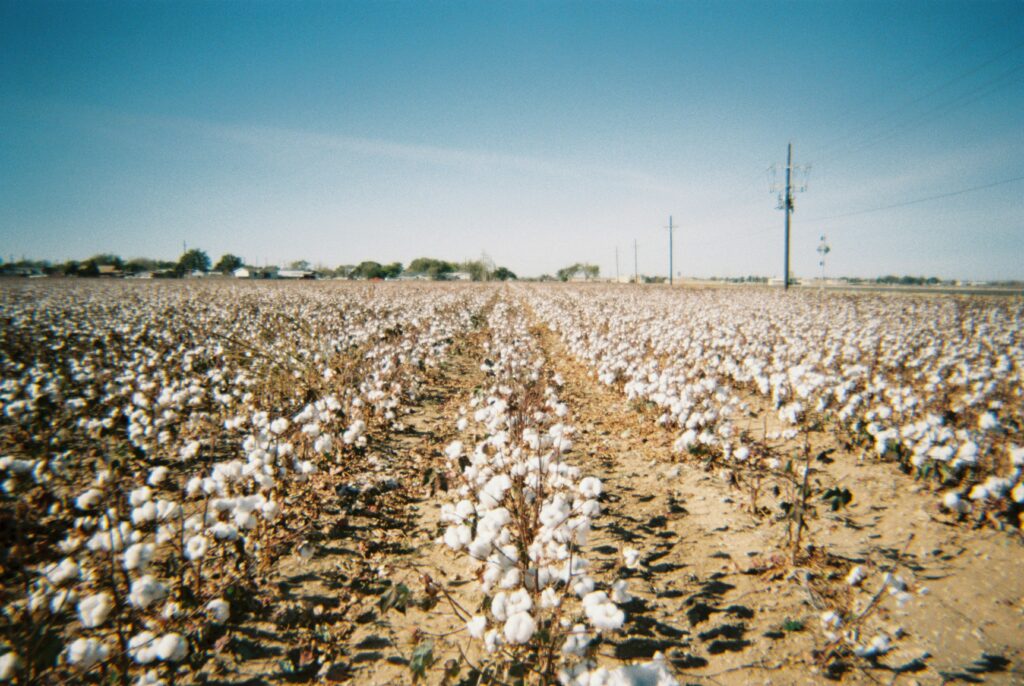
Photo Courtesy of Emma Dau
Cotton Production Today
Ray Ragsdale, COO at Texas Cotton Marketing Corporation, explained that if the cotton industry dies out, it will never come back, so the U.S. needs to protect the industry.
“People aren’t lining up to go be farmers. So, every year, we lose a natural amount of producers anyway, and so if we can’t figure out a way for them to at least have some kind of comfortable lifestyle, then… we’re going to lose them all, and once they’re gone it’s hard to get them back,” Ragsdale said.
One bill that is looking to protect the cotton industry is the Buying American Cotton Act of 2026 “to encourage the consumption of cotton which originated in the United States, and products which are made from such cotton…” The bill was just introduced January 2026 and will need to be passed in the House, Senate and then signed by the President. However, the bill does not replace need for demand in cotton products from American consumers.
Brad Williams, 2026 Horace Hayden National Cotton Ginner of the Year and veteran Tennessee ginner, witnessed firsthand the commercialization or industrialization of the cotton industry country-wide, meaning the industry is going from smaller operations to larger ones. Williams is part of a family farm operation that consists of his father-in-law, mother-in-law, wife and brother and sister-in-law since 1997. They started with 4,000 acres and grew to their current operation with almost 20,000 acres. For their 2026 growing season, they are growing cotton along with corn and soybeans.
Williams said, “We have fewer farmers. So, some of the farms have gotten bigger or they merge together with other… farmers spreading out their … production costs”
This affects every part of the cotton industry, Steven Birkenfeld, general manager of Top of Texas, explained. The Top of Texas Gin struggles to find new famers’ who want the gin to process their cotton because there are not as many people growing cotton.
Because of the commercialization of the cotton industry, Ragsdale explained that smaller farms that produce 700-800 bales do not have as much priority to buyers as a larger producer of 7000-8000 bales, but these smaller producers are important because they keep the market competitive. “As you move towards the east, you get more and more of commercial farming operations,” Ragsdale said, “those [commercial farming operations] are essential as well, because they do have such a… large volume impact.”
Both the smaller producers and the larger producers play a key role in growing the cotton that will be ginned and manufactured to make a final product.
Growing the Cotton Texans Live In
Texas Shelly Heinrich, Southern Plains Regional Communications Manager for The Cotton Board and family farm operation owner in southern Lubbock and Lynn counties, said that Texas has a wide range of cotton growing acres from the Gulf Coast to the Rio Grande Valley.
Texas produces 40% of U.S. cotton in recent years according to the USDA, averaging around 6 million bales produced from 2018-2020. Out of the millions of bales Texas produces, the USDA said, “One bale of cotton—approximately 480 pounds of cleaned cotton lint—can make more than 200 pairs of jeans or 1,200 t-shirts.” Heinrich further explained, Texas grows 3.5 million bales per year which is 25% of U.S. crop because seasons vary, but sometimes Texas grows a higher percentage, Heinrich explained. Therefore, Texas grows between 6 million bales (40% of U.S. cotton) or 3.5 million bales (25% of U.S. cotton) depending on the season.
Cotton takes more production and time than other commodity crops because it takes management while growing and is “a little more picky,” said Heinrich.
Heinrich explained that South Texas in the San Antonio area start their planting season March 1. After the crops in the area are fully grown, harvest starts at the end of July or beginning of August depending on the weather and the heat. The Texas panhandle plains, which grow the largest percentage of cotton in Texas, start planting May 10 to June 20. Then, harvest starts October 1 to December 15.
To start the planting process, producers make sure equipment is all in place before daylight, Heinrich explained. They make sure everything is clean and ready to go. They check that the tractors and equipment are ready, load the planters with cotton seed, check the wind, temperature and rainfall opportunities, and make sure their seed variety is the right one for the field. Typically, a bag of seed is $400 per bag. Some varieties grow faster, but some take longer in hope of quality lint. Some are also more heat or drought tolerant.
After preparing, the producers start planting around 30 minutes after sunrise, said Heinrich. They must track the seeding depth and seeding rate, which is somewhere between one seed per foot or 3-4 seeds per foot. Sometimes they plant 24 hours straight and trade off tractor drivers. Producers use computer systems to register all planting decisions and calculate seeding rates. The producers also use herbicides and fertilizers. Less than a tenth of an ounce of pesticides are used per pound of cotton, according to Cotton Incorporated. Finally, after seven to 10 days, the seed starts emerging, Heinrich continued.
After the seed sprouts, Heinrich said the cotton seedling is “dancing with mother nature” and are at the mercy of the wind and rain. Because of this, many producers plant cover crops like wheat, rye, or legumes to protect the seedling from the wind. The dust will kill it if it gets to the seedling.
After the crop is established, the producers look at irrigation, insect pressures, and weather patterns so they know what’s in store. The producers also check the weed pressures because weeds threaten cotton plants by taking away moisture and sticking to cotton lint, which is the white fiber used to create cotton products like fabric.
Harvesting
Duncan McCook from the Texas Cotton Ginners’ Association explained that the producers usually defoliate the crop before harvesting. Defoliation means that they are getting rid of as much of the extra material on the stock like leaves as possible, so the only thing that is left is the main stock and the cotton to make it easier to clean in the ginning process. However, producers in West Texas will wait for a freeze to defoliate the crop, while farmers in South Texas spray to defoliate the crop.
Harvest time lasts from August to December, Shelly Heinrich explained.
After harvest, McCook explained that the producers bring the seed cotton to the gins in rectangular or modern round modules and bring them to the gin. At the gin, they store the modules marked with the grower and field on the property until they start ginning.
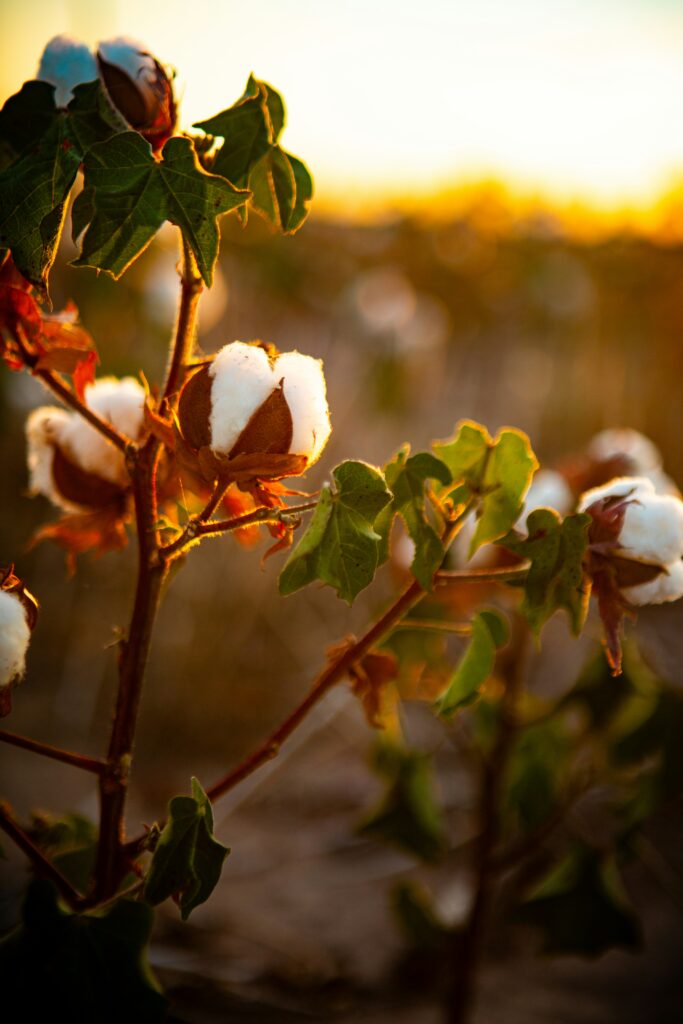
Photo Courtesy of Wendi Shervington
Ginning
Bruce Alphin from the Commonwealth Gin in Virginia gives insight into the overall view of cotton ginning saying that most people don’t even know that cotton gins exist. He explained that people thought his family was in the gin liquor business, rather than cotton ginning.
In addition, Greg Holt, research leader at the USDA from Lubbock, Texas, said, “I think most folks in larger cities don’t have an appreciation for all the effort and energy that goes into making the fiber that’s in their blue jeans or their shirts or other clothing.”
“The best quality of a cotton plant is when it’s in the field. From that point on, anything that is done is going to be shortening the fiber” He said, “What we’re trying to do is preserve the original fiber quality, and… make it a marketable product.”
Unlike most crops, cotton is the only commodity that cannot be directly used out of the field because the gin must separate the seed from the lint fiber first, Bruce Alphine explained.
According to the USDA, a cotton gin’s principal function is “to separate lint from seed, but the gin must also be equipped to remove foreign matter, moisture, and other contaminants that significantly reduce the value of the ginned lint.”
McCook called it a “gigantic seed cotton disassembly plant.” The seed cotton consists of the cotton seed, the lint fiber, moisture in the lint and some plant material in the lint like stems, burrs and leaf material.
To begin the ginning process, the cotton will go through the drying system, McCook explained. The goal is to remove some of the moisture from the lint, so it is easier to clean because the dirt clings to moisture.
The cotton will then go through the pre-cleaning process where the various machines remove some of the finer material called pin trash and the leaves. Then some of the machines will remove the larger trash like sticks and burrs.
After the pre-cleaning process, the cotton then goes into the feeders which move or “feed” the cotton into the gin stands. Generally, multiple gin stands remove the fiber from the seed. The stands have saws that are lined vertically on a shaft with ribs between each saw. The seed cutting is fed down into the saw. The saw grabs the lint and pulls it between the ribs, but the larger seed remains inside the saws until most of the lint is removed.
The seed will drop out of the bottom of the gin stand, to a storage area. The gin trash is also stored outside.
The lint will be cleaned with a fine mesh saw and grid bars. The machines cull the short cotton fibers out of the main fiber, so when the cotton goes to the textile mill the longer fibers make higher quality yarn. The short fibers which are not fit for spinning are called motes and are used for stuffing, paper, some Q tips and other products.
After the lint is cleaned, it will go to packaging. The lint is put into a bale press to be pressed into a 500-pound bale of lint.
After the bale is pressed, the ginners will take a sample to the USDA where it is graded by color, length, strength and more.
Environmental Factors
In addition to the main ginning process, every cotton gin in Texas is required to regulate air emissions.
McCook explained that the main environmental effect is that gins have a lot of material moved around pneumatically, or by using air pressure. As a result, the gins must control the air emissions that are coming off the back of the facility, remove the dust from the air before it is emitted back into the air, and do something with that dusty material.
In the state of Texas, all cotton gins have air permits with the Texas Commission on Environmental Quality requiring them to have controls, like cyclones, or mesh screen or plenum chambers, on all the emission points. They calculate what the emissions are to make sure they are compliant with TCEQ requirements.
McCook explained that all facilities are limited to a certain amount of particulate matter (PM) emissions. The smaller the particles the easier it is for people to breathe dust into their lungs rather than coughing the particles out. PM 10 emissions are emissions of particulate matter smaller than 10 microns. PM 2.5 emissions are emissions of particulate matter smaller than 2.5 microns. TCEQ specifically wants to control PM 10 or PM 2.5 emissions more stringently.
Innovation
In 1794, Eli Whitney received a patent for his cotton gin, launching the cotton gin industry. Since then, the cotton gin has improved efficiency, but the basic idea remains the same.
McCook explained that the types of equipment used in a cotton gin are very similar to what was invented by Eli Whitney, except now the equipment is larger and has higher capacity and a higher number of bales per hour.
Specifically, Steven Birkentfeld, general manager of Top of Texas Gin, explained that the old gin stands, the gins would produce five to eight bales an hour per machine, but now on the Lummus 170, which is an eight-foot gin stand, they run 10 to 15 bales an hour through each machine. “If you’re going to be an average size gin in today’s day and age, you better be running at least 45 bales an hour, or at least, you better have the capacity to be able to run 45 bales an hour.” Birkenfeld said his gin runs 24/7 during harvest and only shuts off for 48 hours for Christmas.
Bruce Alphine, from Commonwealth Gin in Virginia, explained that technology allows the industry to downsize its workforce, which can be problematic for American employment.
He explained that when looking at a new piece of technology they are deciding whether they want people or new technology because they come to around the same cost. However, Alphine explained that going from a two-man bale bagger to a newer one-man bagger costs about the same, but the efficiency from the newer machinery is critical.
McCook explained that labor costs are high and the gins want to reduce accidents, so automation generally makes the facility more efficient with fewer people.
The cotton industry is also looking to introduce AI to the cotton gins. Alphine said that he can foresee the day when the ginner is basically AI with a good electrician and workers needed to run the equipment.
Holt also explained that he and his team are working on implementing AI tools into the ginning process for decision-making such as preventative maintenances and management and labor constraints.
Downsizing and the Mega Gin
Because of new technology, gins are downsizing and using fewer people.
Birkenfeld said that this is not any different than what is happening in other industries, “As technology has advanced in our industry, it’s led to bigger, faster gin plants going in, and the ones that haven’t updated or weren’t able to be expanded or updated, they’ve closed.”
Instead of retrofitting older, smaller buildings, it is less expensive for gin owners to build larger plants with newer equipment, Birkenfeld explained.
McCook explained that many small facilities are closing or merging to make larger facilities that can handle a lot more bales per hour and bales per year.
Williams said that many gins have closed because they did not advance technology so “Other gins have picked up the newer business that was out there from other growers in the area.” Brad William’s gin operation started in 1989. His father-in-law bought it when it only processed 4,000 bales of cotton. By 2006, the gin processed almost 80,000 bales of cotton. This was their biggest year. Now they average between 50,000 and 60,000 bales every year.
Having these larger, more technologically advanced gins help in efficiency, but also hinder competition. Ragsdale said, “On one hand, the mega gin is great because it can handle so much cotton at a faster rate, but I do think you lose a little bit of the individuality.” He explained that mega cotton producers have helped the industry but may have also affected competitiveness. Although, Texas still has small producers that do well.
The competitive market is protected if there are small cotton producers and small gins. The smaller producers keep big producers from being able to dictate pricing, Ray Ragsdale explained. Similarly, the smaller gins keep large gins from being able to dictate outcome or efficiencies.
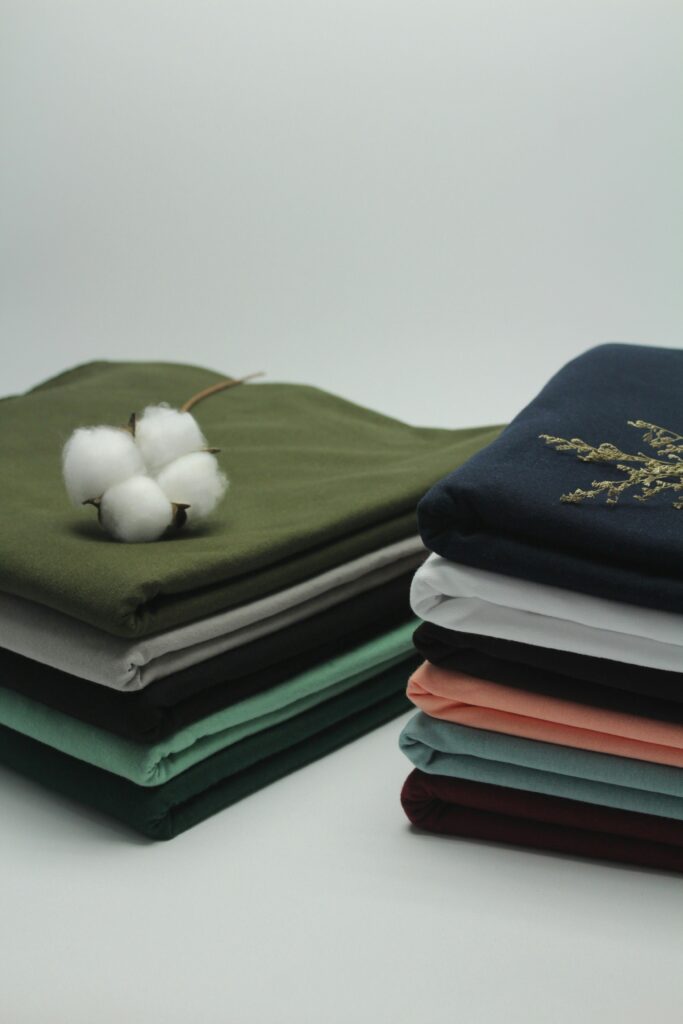
Photo Courtesy of Moonstarious Project
Exportation
Classification of Cotton
Heinrich explained that producers are paid for the lint itself and trade their ginning expenses for the seed. The producers do not get paid until they sell their crop.
To market their crop, the producers will have their cotton classified. The USDA explained that although the cotton classification is not required, the produce find it necessary for marketing and participation in the USDA price support program. “Practically all cotton grown in the United States is classed by USDA at the request of producers. Although classification is not mandatory, growers generally find it essential to marketing their crop and for participation in the USDA price support program.”
USDA classifies cotton based on fiber length, length uniformity, fiber strength, micronaire or thickness of the cotton’s walls, color, trash, leaf, and extraneous matter.
After the classification process, the producers sell their cotton to marketers. McCook explained that the merchants, or marketers, will buy cotton for textile mills. The marketers look for a certain quality of cotton and send it to the mill. The quality of cotton depends on the type of product the textile mills are trying to make.
Ragsdale explained that in southeast Texas the gins predominantly market all the cotton by taking the cotton, putting it on a recap, one page summary of the cotton’s quality, and selling it together. “Gins do a lot of the heavy lifting on marketing the cotton.”
As a cotton marketer, Ragsdale talks with his international agents about what they are trying to buy, typically from 9 to 11 p.m. From 6 to 10 a.m. when international agents are winding down their day, he talks with them a little more and then looks at recaps, or the summaries of the producer’s cotton quality, the rest of the day. “We’re looking at recaps all day, trying to buy those [cotton bales on the recap] and then hedging it against the market.” The market trades from 8 p.m. that day to 1:30 the next afternoon.
Ragsdale said, “We’ll send out our offers overnight to all those textile mills with what the price is for the day, and then see if we can get anything traded. But essentially what we’re doing is buying during the day and trying to sell it overnight.”
The U.S. let the textile industry leave approximately 30 years ago, so they produce a good that it does not use. “That puts us at a pretty significant disadvantage to the world, because it’s not like, ‘Hey, if you don’t want it, then we’ll use it here.’ We have to export it,” said Ragsdale. The U.S. produces between 13-16 million bales every year, but only use 3 million, so the U.S. must export on the international market. Brazil in the last three years has become a major competitor. Over the last two years, Brazil has overtaken the U.S. as the largest exporter.
China is currently both the largest cotton consumer and producer, Ragsdale explained. However, President Trump issued an executive order Feb. 1 to impose a 10% tariff on all goods from China, according to the Library of Congress. Trump raised the tariffs to 20% on March 3 and then lowered the tariff rate back to 10% in November. Because of the tariffs, China will no longer buy U.S. cotton. Ragsdale explained that China might have said they are “not going to buy U.S. cotton directly from the U.S., but our Vietnamese sister company will buy the US cotton, spin it into yarn and then sell it to China. So, it was still being used.”
Call to Action
The cotton industry has become increasingly commercialized and competitive. To help the cotton industry thrive, the professionals unanimously say the solution is to buy more cotton.
“You do have a choice,” said Ragsdale, “If you want the cotton industry in the US to survive, pick cotton… even if it’s not 100%.”
Holt explained that natural fibers like cotton, coconut core or flax are not in competition with each other but rather in competition with man-made fibers like nylon or polyester.
Ragsdale said, “In the last five years, you know, what has started showing up is this plastics phenomenon. And so, I think the cotton industry, specifically the U.S. cotton industry, is really starting to kind of fight back.”
Only 35% of people say they check the label on clothing to see if it is made from natural fibers, according to the National Cotton Council of America’s “Plant Not Plastic” Campaign. Checking the label is important for reducing microplastic pollution.
Marjory Walker, Vice President of the National Cotton Council Operations, said, “When consumers realize that the tiny plastic fibers shedding from their clothes can end up in the food they eat, the water they drink, and even within their own organs, the issue becomes incredibly personal.”
If consumers choose clothing made from natural fibers like cotton, they can reduce their personal contribution to microplastic pollution and its potential health impacts, Walker said.
In addition, cotton is naturally biodegradable, so it does not create microplastics and may be recycled
Ragsdale said, “If you know you care about environment, then pick cotton, because your plastic isn’t going to the ocean and into the fish and into the food.”
To learn how to help protect the cotton industry, visit thefabricofourlives.com.